English
 Arabic
 Chinese (Simplified)
 Dutch
Dutch French
 German
 Italian
 Portuguese
 Russian
 Spanish
Cardiac imaging refers to a group of non-invasive and minimally invasive diagnostic tests that allow physicians to visualize the structure and function of the heart and detect various cardiac abnormalities.
It allows physicians to evaluate:
- Heart chambers and muscle thickness
- Pumping strength (ejection fraction)
- Heart valves
- Coronary arteries
- Blood flow to the heart muscle
- Scar tissue or inflammation
When Is Cardiac Imaging Used for Screening?
Cardiac imaging is typically recommended for:
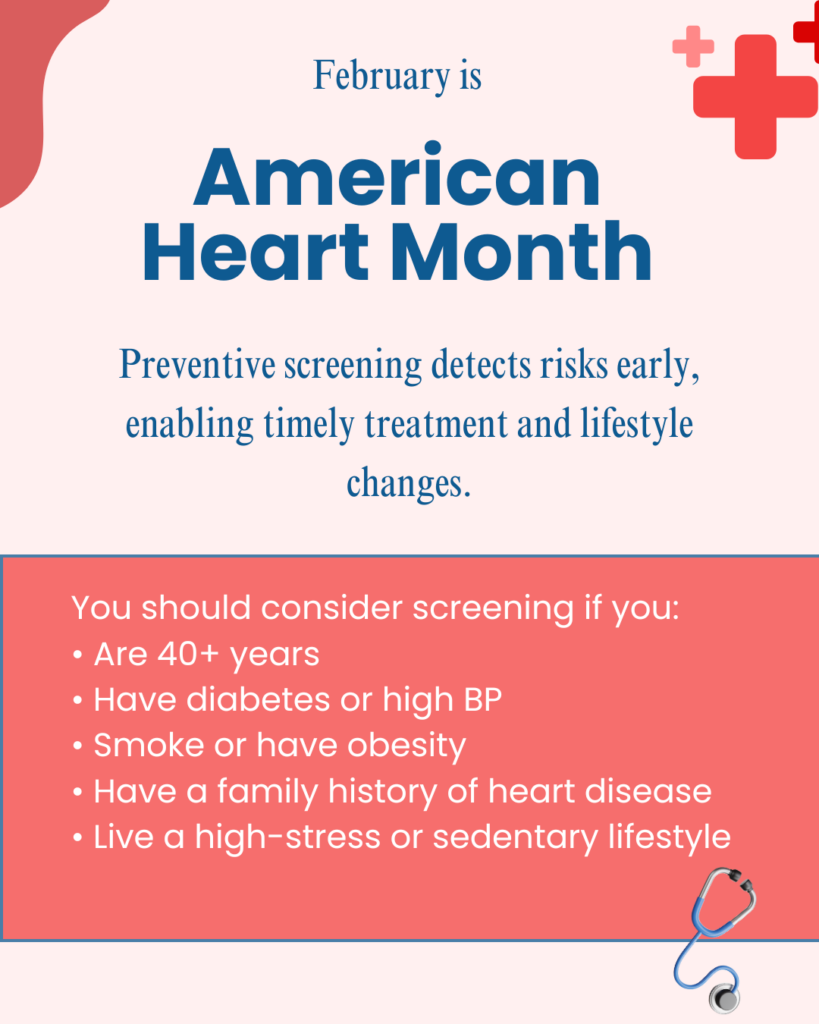
- People at intermediate or high cardiovascular risk
- People with a strong family history of early heart disease
- People with multiple risk factors (diabetes, hypertension, smoking)
- People experiencing unexplained chest pain or shortness of breath
- When traditional risk assessment leaves uncertainty
It is not routinely recommended for low-risk, symptom-free individuals.
Types of Cardiac Imaging Used in Screening
- Coronary Artery Calcium (CAC) Scoring (Cardiac CT)
- CT Coronary Angiography (CCTA)
- Echocardiography
- Cardiac MRI
- Nuclear Stress Testing (SPECT/PET)
- Cardiac Catheterization (Invasive Angiography)
1. Coronary Artery Calcium (CAC) Scoring (Cardiac CT)
Cardiac computed tomography (CT) for Calcium Scoring detects early plaque buildup in coronary arteries. It uses a low-dose CT scanner to measure calcium deposits in arteries supplying the heart.
It is best used for:
- Adults 40–75 with intermediate risk
- Individuals with family history of premature heart disease
- Patients considering preventive medications (like statins)
The Radiological Society of North America notes that calcium scoring is a strong predictor of future heart events, even before symptoms occur.
2. CT Coronary Angiography (CCTA)
A cardiac CT angiography (CCTA) scan uses X-rays to take images of your heart and blood vessels. It is used to detect narrowed arteries and blood vessels.
CCTA uses contrast dye and CT imaging to provide highly detailed images of coronary arteries.
It is recommended for patients with stable chest pain, abnormal stress test results, and higher-risk individuals who need a detailed evaluation. It is non-invasive and often reduces the need for invasive catheterization.
3. Echocardiography
Echocardiography provides real-time imaging of heart structures throughout the cardiac cycle, allowing physicians to evaluate overall heart structure and function.
Echocardiography uses ultrasound waves to assess: Pumping function, Valve disease, Heart enlargement, and Cardiomyopathy.
It is commonly used for patients with high blood pressure, heart murmurs, a family history of cardiomyopathy, and symptoms such as fatigue or shortness of breath. It is radiation-free and widely accessible.
4. Cardiac MRI
Cardiac MRI is used to provide detailed imaging without radiation. It is used for advanced analysis of heart muscle and tissue and is especially helpful for evaluating cardiomyopathy, myocarditis, congenital heart disease, scar tissue, and cardiac tumors.
It offers superior tissue characterization compared to other modalities.
5. Nuclear Stress Testing (SPECT/PET)
Nuclear Stress Testing uses small amounts of radioactive tracer to determine whether the heart muscle receives enough blood during exercise or medication-induced stress.
The Society of Nuclear Medicine and Molecular Imaging highlights its importance in detecting functionally significant coronary artery disease.
6. Cardiac Catheterization (Invasive Angiography)
Cardiac catheterisation is an invasive diagnostic procedure that provides detailed information about the structure and function of the heart. It typically involves taking X-ray images of the heart’s arteries (coronary arteries) using a technique called coronary angiography (also known as arteriography). The resulting images are referred to as coronary angiograms or arteriograms.
General Preparation Guidelines for Cardiac Screening
Proper preparation helps ensure accurate results and a smooth testing experience. While instructions vary depending on the type of imaging, these general guidelines apply to most cardiac screening tests:
- Follow fasting instructions if provided (often 4–8 hours for certain CT or stress tests).
- Avoid caffeine and nicotine for 12–24 hours before stress-related imaging.
- Review your medications with your provider—some may need temporary adjustment.
- Stay hydrated unless instructed otherwise, especially if contrast dye will be used.
- Wear comfortable clothing and avoid metal accessories.
- Inform your care team about kidney disease, allergies to contrast dye, pregnancy, or implanted devices.
The National Heart, Lung, and Blood Institute recommends carefully following your provider’s instructions to ensure safe and reliable results.
If you’re unsure about preparation steps, contact your imaging center in advance for clarification.
Questions to Ask Before Your Test
- Why is this test recommended?
- What are the risks and benefits?
- Do I need to stop any medications?
- Will contrast dye be used?
- When will I receive results?
- Understanding the purpose of your test helps reduce anxiety and improve decision-making.
Final Note
Cardiac imaging has transformed heart care by allowing physicians to detect disease earlier, personalize treatment plans, and prevent life-threatening events. From calcium scoring and echocardiography to advanced MRI and CT angiography, each modality serves a specific clinical purpose.
Preparation is an important part of ensuring accurate and safe results. If cardiac imaging has been recommended for you, follow your provider’s instructions carefully and don’t hesitate to ask questions.
When used appropriately, cardiac imaging is one of the most powerful tools in protecting long-term heart health.
IntelliRad’s specialty-trained doctors—known as radiologists—use advanced imaging technologies to accurately diagnose disease and/or guide minimally invasive treatment. Learn more about our services here.